

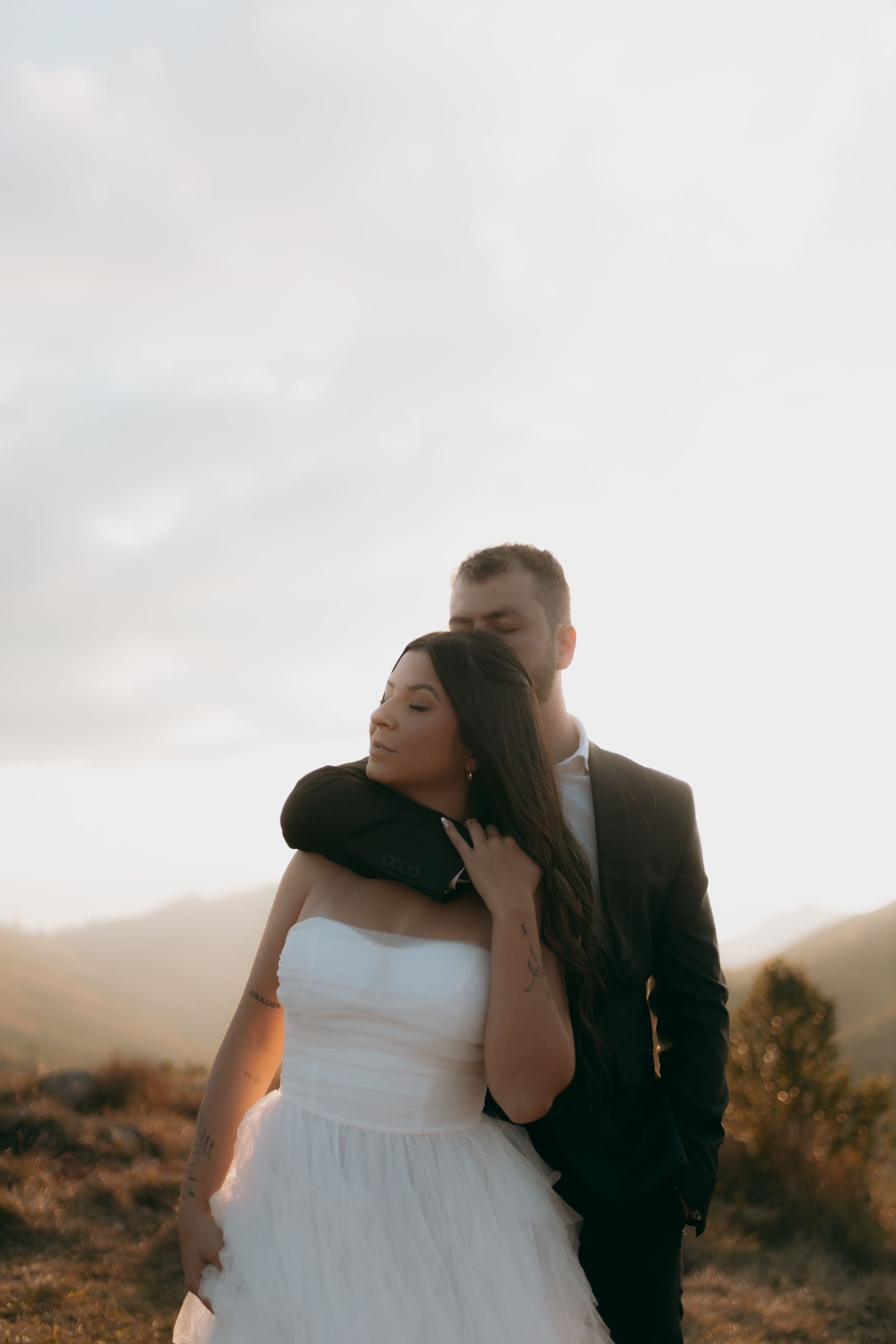
23 Nov Best Banff Wedding Photo Stops by Car
Ask a photographer who works in the Rockies what makes or breaks a wedding gallery and the answer is rarely the camera. It is the schedule. Golden light lasts a short time, mountain weather changes without warning, and every extra minute lost to parking, waiting for a second car or driving around looking for a pullout is a minute taken from the couple’s portraits.
That is why so many couples now plan their Banff wedding photo locations around a route rather than a list. When a chauffeur is driving, the bridal party can step in and out of the car at each stop, the dress stays clean, and the photographer gets the time they need. This guide walks through the best photo stops in and around Banff that work well by car, how long each one deserves, and how to build a timeline that keeps everyone calm.
Before you pick the stops
A few ground rules make the rest of the planning easier.
- Check Parks Canada rules. Banff is a national park. Professional photography and filming can require permits, and some locations have restrictions on tripods, drones and group sizes. Your photographer will usually know the current rules, but you should ask them to confirm. We cannot give permit advice.
- Know the season. Some roads and viewpoints are closed or restricted in winter. The Lake Minnewanka Loop, for instance, is partly closed to vehicles in the colder months, so check before you finalise a plan.
- Expect other visitors. The best-known viewpoints are busy, especially in summer. Early mornings and weekdays are quieter.
- Have a weather plan. Mountain weather swings fast. Pick one or two indoor or sheltered alternatives, and talk to your photographer about how they handle rain or snow.
Stop 1: Surprise Corner and the Banff Springs view
Close to the Fairmont Banff Springs, the viewpoint known as Surprise Corner looks across the Bow River to the hotel with the mountains behind it. It is one of the classic Banff images, and it is easy to reach by car. A good plan is to arrive just before the light turns golden, take a few wide shots with the hotel in the frame and then move on while the crowds are still thin.
Time to allow: 15 to 20 minutes. Best for: an elegant, traditional feel with the architecture and river in the background.
Stop 2: Bow Falls and the river path
The Bow River tumbles over a rocky ledge not far from the hotel, and the viewing area gives a strong sense of the power of the landscape. It works well for movement shots such as veils and dresses in the breeze, and the sound of the water adds atmosphere for video.
Time to allow: 15 minutes. Best for: candid moments and dynamic photos near moving water.
Stop 3: Vermilion Lakes
West of the Banff townsite, Vermilion Lakes Road follows a chain of shallow lakes and wetlands with Mount Rundle rising behind them. It is a favourite for sunrise and sunset because the still water can mirror the sky. The road is short, with several pullouts, which makes it a good candidate for a relaxed session where the car moves a few hundred metres at a time.
Time to allow: 30 to 45 minutes. Best for: sunrise elopements, sunset portraits and big, uncluttered landscapes.
Stop 4: Lake Minnewanka
A short drive from town, Lake Minnewanka is Banff’s largest lake and has a wide, open feel quite different from the busy lakeshore at Lake Louise. The surrounding hills and long views give you plenty of room for group photos with a larger wedding party. Because access can be limited in winter, confirm what is open before committing. If you want to see what a full visit looks like, our Lake Minnewanka private tour page explains the area in more detail.
Time to allow: 30 to 40 minutes. Best for: larger groups and relaxed, open-air photos.
Stop 5: Two Jack Lake and the Minnewanka Loop
The same road brings you to Two Jack Lake, a smaller and more sheltered stop with a calm shoreline and mountains behind. Where Minnewanka is wide, Two Jack feels intimate. It makes a good second location for portraits in softer light.
Time to allow: 20 to 30 minutes. Best for: quiet portraits and reflections on a still morning.
Stop 6: Lake Louise
Everyone knows Lake Louise, which is why it is so busy. The shoreline sits in front of a glacier-fed lake backed by Victoria Glacier, and many couples want at least a few frames there. The key is timing: go early or in the evening, and expect crowds at midday. Our Lake Louise wedding limo page explains how we handle arrivals at this popular location.
Time to allow: 30 to 45 minutes, plus parking and walking time. Best for: iconic images, if you can handle the crowds.
Stop 7: Moraine Lake (with a caution)
Moraine Lake is among the most photographed places in Canada. Access, however, is tightly managed. Parks Canada restricts personal vehicles on the Moraine Lake Road, and visitors reach the lake by approved shuttles and guided or commercial services. If Moraine Lake is on your list, ask your photographer and your transport provider what is currently permitted, and plan well ahead. We confirm the Parks Canada rules before quoting any Moraine Lake trip.
Time to allow: plan a dedicated session. Best for: couples who are happy to organise the logistics in advance.
Stop 8: Bow Valley viewpoints and Canmore
If you are staying in or marrying near Canmore, the Bow Valley has its own set of locations, from the pedestrian bridges and riverside paths in town to the wider valley views toward the Three Sisters. These are less crowded than the famous Banff and Lake Louise spots and fit well with a ceremony earlier in the day. See our Canmore wedding limo page for how we plan these routes.
Time to allow: 20 to 30 minutes per stop. Best for: a calmer day with more privacy.
Building the timeline
A route is only as good as the schedule behind it. Here is a sample plan for an afternoon ceremony in Banff, which you can adapt.
- Three hours before sunset: bridal party pickup and short drive to the ceremony venue.
- Ceremony and group photos: allow time for family portraits at the venue, since you will be moving after that.
- Two hours before sunset: leave for the first stop, such as Surprise Corner, with a brief walk and a few frames.
- One hour before sunset: drive to Vermilion Lakes or Lake Minnewanka for the main portrait session.
- Golden hour: the most important photographs, with extra time built in for light or weather.
- After sunset: return to the reception, with a short stop for twilight shots if the sky allows.
Always add padding. Ten minutes at each stop can vanish to parking, a wardrobe adjustment or a passing elk.
Choosing the time of day
The same location can look completely different at different hours, and the time you pick shapes the whole plan. Early morning offers calm water, soft light and far fewer people, which is why many elopement couples choose sunrise sessions at Vermilion Lakes. Midday light is harsh in the mountains, with strong contrast and crowds at the famous lakes, so most photographers avoid it for portraits and use it for ceremonies, lunches and travel between areas.
The late afternoon and evening are the classic choice for a reason. Warm light rakes across the peaks and the colours deepen, but you also have the shortest margin for error. In summer the sun sets late, which gives you a generous window. In autumn and winter, daylight is limited and the schedule must be tighter. Ask your photographer for the exact sunset time on your date and work backwards from it.
If the weather does not cooperate
Rain, wind and snow are all possible in the Rockies, sometimes in the same afternoon. The good news is that moody skies make striking photographs, and many couples treasure the images from a cloudy day more than the sunny ones. What matters is preparation.
- Keep umbrellas, towels and a spare set of shoes in the vehicle.
- Ask your photographer about indoor or covered locations close to your route, such as hotel lobbies and terraces.
- Allow extra time for driving, since wet or snowy roads slow everything down.
- Agree in advance on a decision time, such as two hours before the shoot, when you will choose between the main plan and the backup.
Questions to ask your photographer
- Which stops do you recommend for our date and our group size?
- How long do you need at each stop?
- Do you handle the park permit requirements, and is anything needed from us?
- What is your plan if the light or the weather changes?
- Do you want the car to wait, or return later?
Sharing the photographer’s answers with your transport provider means everyone is working from the same timeline, which is the real secret to an unhurried wedding day.
What a wedding chauffeur adds
A driver who works weddings regularly thinks about the same things your photographer does. Where is the light? How long will the dress take to get in and out of the car? Is there a safe pullout with enough room for the party? Having a chauffeur manage the route frees the couple and the photographer to focus on the images.
It also makes the group’s life easier. Guests can ride together, the bridal party stays on time and no one has to drive after the celebration begins. Our wedding transportation page explains the options, including the 1956 Rolls-Royce Silver Cloud I and our stretch limousines. For ideas on a different route, read our guide to the wedding photo stops between Calgary and Emerald Lake Lodge.
Tips from the road
- Bring layers. Even in July the evening can be cold. A shawl or jacket keeps the couple comfortable between photographs.
- Pack flat shoes. Heels and gravel pullouts do not mix.
- Assign one person to hold the dress. This saves time at every stop.
- Keep water and snacks in the car. Long photo sessions are hungrier than people expect.
- Share the route with everyone. The photographer, the venue and the driver should all have the same timeline.
- Stay flexible. If the light is better at one stop than another, spend more time there.
Respecting the park
Banff is a protected environment, and wildlife is a real consideration. Stay on established paths and pullouts, keep a safe distance from animals and follow all posted rules. Leave no litter, and avoid trampling vegetation for a better angle. A photograph is never worth damaging the place that makes it beautiful.
Related reading
If you are planning a wider trip, these guides from our blog may help you decide what to book and when:
- Canmore and Exshaw wedding photo stops
- The Minnewanka Loop and Vermilion Lakes by private car
- Emerald Lake and Yoho National Park private tour
Frequently asked questions
How many photo stops should we plan?
Three or four is a sensible number for most weddings. More stops mean more driving and less time at each location.
Do we need a permit to take wedding photos in Banff?
Rules depend on the type of photography and the location. Professional photographers usually know the current Parks Canada requirements, so ask them to confirm before the day.
Can the car wait while we take photographs?
Yes, a chauffeur can wait at each stop and move on when you are ready. Tell us how you plan the day so we can build in enough time.
Which stops are best in winter?
Surprise Corner, Bow Falls and the Bow Valley are usually accessible, while some roads, such as parts of the Minnewanka Loop, may be restricted. Check conditions before finalising your plan.
Can you take a larger wedding party?
Our fleet includes stretch limousines for 10 to 12 passengers and a 14-passenger Ford Transit van. We can also arrange more than one vehicle.
Plan your route with us
Great wedding photos are made by good timing as much as good scenery. If you are planning a Banff wedding and want a chauffeur who understands a photo schedule, call (403) 762-5558 or send your details through our booking page. Share your date, ceremony location and the stops you have in mind, and we will reply with a written quote.
