

25 Nov Icefields Parkway Day Trip: Bow Lake & Num-Ti-Jah Lodge
The Icefields Parkway is the kind of road that people put on a list long before they ever see it. It runs north from Lake Louise through the heart of the Canadian Rockies, with glaciers on one side, jagged peaks on the other and a series of turquoise lakes strung along the valley floor. Much of the pleasure is in the driving itself, yet it is also a road where a good plan, a safe vehicle and a relaxed driver make a real difference.
This guide focuses on one of its most rewarding day trips: a private run from Banff or Lake Louise out to Bow Lake and Num-Ti-Jah Lodge, with a few stops on the way. We cover the route, what to see, how long to allow, the seasonal cautions that matter and what a chauffeur-driven day looks like in practice.
The Parkway in brief
The Icefields Parkway, also known as Highway 93 North, links Lake Louise with Jasper. The full route is about 232 kilometres, and many travellers drive some or all of it as part of a longer journey. A day trip from Banff or Lake Louise usually takes in only the southern section, which holds some of the best-known stops, including Bow Lake and the viewpoint over Peyto Lake near Bow Summit.
It is a national park road, so a valid park pass is needed. Services along the way are limited, and mobile coverage can be patchy, which is one reason the trip suits a planned day better than an impulsive one.
Why Bow Lake makes a good day trip target
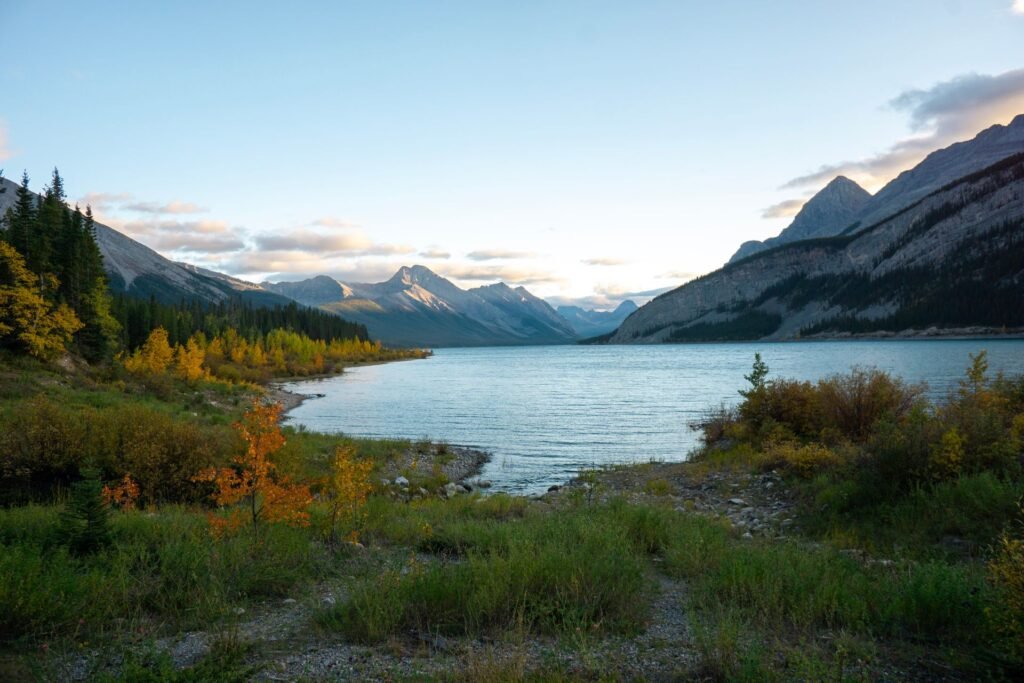
Bow Lake is about 35 kilometres north of Lake Louise, close enough to reach in a reasonable morning drive and far enough to feel like a proper adventure. It is the source of the Bow River, which flows past Banff and Calgary. The lake sits below the Wapta Icefield, with Crowfoot Glacier visible nearby, and on a calm day the water holds a clear reflection of the mountains behind it.
On the shore stands Num-Ti-Jah Lodge, a historic mountain lodge with a distinctive red roof. It is one of the most photographed buildings in the Rockies, and for many visitors, it is the reason for the whole trip. Opening seasons and services vary, so check the lodge before you plan a meal there rather than assuming it will be available on your date.
A route that works
Start: Banff or Lake Louise
From Banff, you travel to Lake Louise on the Trans-Canada Highway and then turn onto the Parkway. From Lake Louise, you are on the road within minutes. Starting early helps in every season. Light is better, wildlife is more active and the day feels less rushed.
Stop: Herbert Lake and Hector Lake views
Early in the drive, small lakes appear beside the road, and pullouts let you stop for a first look at the mountains. These are quick stops, good for a few minutes of photographs and a stretch.
Stop: Crowfoot Glacier viewpoint
Further north, a viewpoint offers a clear look at the glacier that gave this mountain its name. The ice has changed over the years, and the view is a reminder of how fast the landscape is evolving. Allow ten to fifteen minutes.
Destination: Bow Lake
Plan to spend the longest at Bow Lake. Walk along the shore, take in the view of the glacier and the lodge, and give yourself time to simply sit. If the lodge is open, a hot drink or meal can turn a stop into a highlight.
Time to allow: 60 to 90 minutes.
Optional: Peyto Lake viewpoint
On the way back, or on the way up, many visitors stop at the Bow Summit area to see Peyto Lake from above. The lake has a vivid blue colour, and the viewpoint is reached by a short walk from the car park. Check current conditions, because snow can linger at this altitude well into the season and parking can be crowded in summer.
Time to allow: 30 to 45 minutes, including the walk.
How long does the day take?
For a day trip from Lake Louise, think of five to six hours in total. From Banff, add the drive to Lake Louise. In winter or in poor weather, allow more time, as speeds are lower and some pullouts may be closed. If you want a relaxed lunch and a longer walk at Bow Lake, plan for a full day and start early.
Seasonal cautions
The Parkway is a high-altitude road, and conditions can change quickly. A few points to keep in mind:
- Winter tires or chains are required. Parks Canada requires snow tires or chains on the Icefields Parkway from November 1 to March 31, and whenever the road is covered in snow or ice.
- Closures happen. Avalanche control and weather can close sections of the road with little notice.
- Services are limited. Fuel, food and toilets are spread out, and winter hours are shorter. Fill the tank before you leave and carry water and snacks.
- Daylight is short in winter. Plan to be off the road before dark.
- Mobile coverage is patchy. Download maps and tell someone your route.
Our guide to winter driving from Calgary to Banff covers the general principles, and they apply even more strongly on the Parkway.
Why a chauffeured day trip makes sense
The road is beautiful and long, and the stops are scattered. Being the driver means keeping your eyes on the road while the best views slide past. Being a passenger lets you look. It also lets you share the day with your companions rather than focusing on the next bend.
A chauffeur who knows the route can also manage the practical parts: choosing the timing to avoid crowds, picking safe pullouts, watching conditions and adjusting the plan if a stop is closed. Our tours page describes how we approach private sightseeing, and our Bow Lake private tours page covers this route in particular.
A sample timetable
- 8:00 a.m.: pickup at Lake Louise (or earlier from Banff).
- 8:30 a.m.: first pullouts along the Parkway.
- 9:30 a.m.: Crowfoot Glacier viewpoint.
- 10:00 a.m.: arrive at Bow Lake. Walk, photograph and, if open, take a hot drink at the lodge.
- 11:30 a.m.: optional stop at Bow Summit for the Peyto Lake viewpoint.
- 1:00 p.m.: return to Lake Louise for lunch.
- 2:30 p.m.: drop-off or continue to Banff.
The timetable is an illustration. We build real itineraries around your pickup point, the season and your interests.
Ways to experience the Parkway compared
There is no single right way to see the Icefields Parkway. Here is how the main options stack up, so you can choose the one that suits your trip.
Self-drive
Driving yourself gives complete control of timing, and it can be the best choice for confident drivers who want to linger or explore trailheads. The costs are your attention, your tires and the need to handle changing conditions without help. In winter, that last point matters a great deal.
Large group tours
Coach tours are an efficient, lower-cost way to see the highlights and are well suited to travellers who like a structured programme. The pace is set by the schedule, and the number of stops is limited by what the group can accomplish in a day.
Private chauffeured tour
A private vehicle sits between the two. You have the freedom of a self-drive with none of the driving, and the flexibility of a custom itinerary with a small group. It costs more than a seat on a coach, and many visitors consider it good value for a special trip or a family group.
Bow Lake through the seasons
The lake changes its character through the year, and choosing the season affects what you see.
- Late spring: ice may still cover the lake, and snow can lie on the shoreline. It can look dramatic but wintry, and some facilities may not yet be open.
- Summer: the water turns a milky turquoise as glacial melt feeds it, the shoreline is walkable and daylight lasts long into the evening.
- Autumn: cooler air, golden tones in the lower valleys and fewer crowds. Snow can arrive early at this altitude.
- Winter: a frozen, silent landscape of snow and ice. Spectacular, but with demanding road conditions and limited services.
Photography notes
Bow Lake is a photographer’s favourite for good reason. Early morning light often gives calm water and a clear reflection, while late afternoon light warms the lodge and the surrounding peaks. Wide-angle views capture the scale of the scene, and a longer lens can pick out the texture of the glacier. If you are shooting with a phone, use the grid lines to keep the horizon level, and wait for other visitors to move out of the frame instead of cropping them out later.
Remember that wildlife can appear at any moment, so keep your camera accessible and your distance respectful. A good rule is to enjoy what you see and leave the animals undisturbed.
Travelling with children or older passengers
The Parkway is a long drive with few stops for facilities, so planning matters for families. Children tire of car rides, so build in plenty of stretch breaks and keep snacks and a few activities within reach. For older passengers, check that the walks you have in mind match their comfort level, and choose stops with short, flat paths. Tell us about any needs in advance and we will shape the day accordingly.
What to bring
- Warm layers. The temperature at altitude can be much lower than in the valley.
- Comfortable shoes for walking on gravel and uneven ground.
- Sunglasses and sunscreen, which matter with reflected light.
- Water, snacks and a camera.
- Your park pass, if you have one.
- A small bag for rain jackets and extra layers.
Wildlife and safety
Bears, elk, mountain goats and bighorn sheep all live along the Parkway. Seeing an animal near the road is thrilling, but it also calls for caution. Stay in or beside the vehicle, never approach and never feed wildlife. If you are walking, stay in a group, make some noise on trails and follow Parks Canada advice. Keep dogs on a leash where permitted, and take all food waste with you.
Going further: toward Jasper
Some visitors treat Bow Lake as a turnaround point, and others want to continue north toward the Columbia Icefield and on to Jasper. That is a much longer day and usually involves an overnight stay or a one-way transfer. Our Banff to Jasper shuttle page explains the options for travelling the whole length of the road.
One more planning point: build in a margin for the unexpected. A wildlife jam on the road, a short closure for maintenance or a surprise squall can easily consume an extra half hour, and a trip with margin is almost always a better trip than one run to the minute. If you have flights, dinner bookings or an event the same evening, say so when you enquire, and we will help you choose a start time and an itinerary that leave room to breathe.
Related reading
If you are planning a wider trip, these guides from our blog may help you decide what to book and when:
- Banff to Jasper by private car
- Lake Louise and Moraine Lake in one day
- Calgary to Banff in winter: what to expect on Highway 1
Frequently asked questions
How far is Bow Lake from Lake Louise?
About 35 kilometres north on the Icefields Parkway, a drive of roughly 30 to 40 minutes in good conditions.
Is the Icefields Parkway open in winter?
Yes, but conditions are demanding, and closures happen. Winter tires or chains are required from November 1 to March 31, and services are limited.
Is Num-Ti-Jah Lodge open year-round?
Opening seasons vary. Check with the lodge before you plan a meal or a stay.
Do I need a park pass?
Yes, a valid Parks Canada pass is required for stopping in the national park.
Can you pick me up in Banff?
Yes. We offer pickup from Banff, Canmore and Lake Louise. Tell us where you are staying when you book.
Plan your Icefields Parkway day
The Parkway is a road to enjoy, not to rush. If you would like a private day trip to Bow Lake with a chauffeur at the wheel, call (403) 762-5558 or send your dates and group size through our booking page. We will check the season and road conditions and send a written quote.
